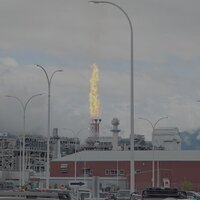


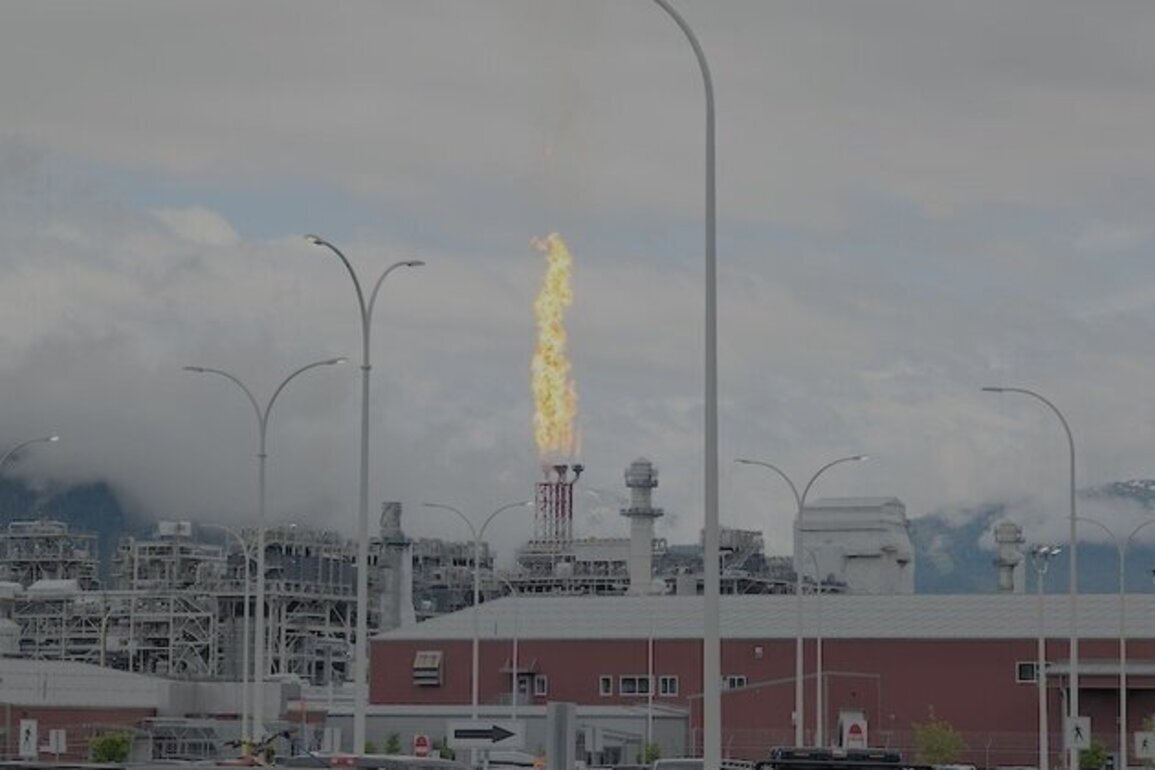
As the LNG Canada liquefied natural gas megaproject prepares to expand its Kitimat export facility, Canadian workers are speaking out against the possibility that their retirement savings may end up funding the project.
Pension beneficiaries who oppose fossil fuel infrastructure investments say such financing puts pension funds in breach of both their fiduciary duty and their obligation to future generations.
"At the end of the day, I work for the well-being of my family, my community," Melissa Rosato, an Ontario Municipal Employees' Retirement System (OMERS) beneficiary, told The Mix. "I'd like to look my kids in the eye and tell them we're doing all we can to ensure a livable planet-for my retirement plans and theirs."
Contractors involved in early site preparation for Phase 2 of the LNG Canada Kitimat facility have been given a "limited notice to proceed." The go-ahead is one of several signals of an accelerating push to get Phase 2, which would double the export capacity of the malfunctioning Kitimat facility from its current 14 million tonnes per year. Shell and Mitsubishi are reportedly looking to sell their stakes, 40% and 15% respectively, in the existing Kitimat facility, which would "free up capital for the owners to finance a Phase 2 expansion," writes Toronto-based Shift Action for Pension Wealth and Planet Health, in a recent memo shared with The Mix.
Shell's C$22-billion acquisition of Arc Resources in late April is also significant, Shift adds. Shell has secured deep interests in the massive Montney natural gas formation, meaning an ample and steady supply of gas for an expanded Kitimat terminal is now secured.
The deal between Shell and Arc suggests that a positive final investment decision on Phase 2 is "likely," Tom Pavic, president of Calgary-based Sayer Energy Advisors, told CBC News.
Finance Minister Francois-Philippe Champagne confirmed in February that he will be meeting quarterly with the managers of Canada's so-called Maple Eight pension funds to discuss how they might channel more of their collective $2.6 trillion in assets into domestic projects.
"We have had a recent discussion with all of them to say ... can we do more together, respecting that they are independent but at the same time looking at opportunities," Champagne told CBC News.
This could include investments in Phase 2 of LNG Canada and other oil and gas infrastructure projects, says Shift.
The pension watchdog adds that the Canada Pension Plan Investment Board (CPPIB), which oversees the retirement savings of 22 million Canadians, has repeatedly signalled interest in the oil and gas sector, telling the Financial Post last September that "here in Canada, we like pipelines, we like oil and gas pipelines."
The largest of the Maple Eight with net assets of more than $793 billion as of March, the CPPIB abandoned its net-zero commitments last May.
In latest news, the CPPIB has appointed yet another "climate-conflicted" director to its board, writes Shift.
Newly-appointed Elizabeth Cannon also serves on the board of Canadian Natural Resources Limited, a member of the Oil Sands Alliance that is a key player in ongoing negotiations with the federal government to build a new oil pipeline in northern British Columbia. "Three of CPPIB's 12 directors now have fossil fuel industry entanglements," writes Shift.
At the annual general meeting of the Ontario Teacher's Pension Plan (OTTP) in mid-April, CEO Jo Taylor refused to rule out further investment in LNG and related infrastructure when pressed on the matter by Patrick McCartney, a retired Toronto District School Board teacher, reports Shift. "Would we discount looking at gas and liquefied natural gas as a project? No, we wouldn't," Taylor said.
Any investment of the OTTP's nearly $280 billion in assets in LNG would be "imprudent," not least because of the accelerating risk of stranded assets, McCartney told The Mix. As renewables meet nearly all new electricity demand globally, and amid geopolitical shifts like China's transformation into an electrostate, "the OTPP should heed the message and focus on renewables," McCartney said.
Longtime high school science teacher Lisa Jeffery sees fossil fuel investments as a potential threat to the wider portfolio. "I am furious that, like our federal government, my pension fund is backsliding on its climate commitments and risking the health and well-being of OTPP pension contributors, our families, and our students, while simultaneously sabotaging other investments in our portfolio such as real estate and infrastructure, which will be negatively impacted by climate change," Jeffery told The Mix.
The Ontario Municipal Employees Retirement System (OMERS) will be divesting its 25% stake in Exolum, a Spanish energy logistics company that owns Europe's largest pipeline network. Some 6,000 kilometres in total, the network services Spain and Britain.
The deal is expected to close sometime in the third quarter of 2026, reports Reuters.
Exolum is OMERS' "last known remaining privately owned fossil fuel asset," writes Shift.
MPP Aislinn Clancy (GPC-Kitchener Centre) hailed OMERS' decision.
"This is great news," Clancy told The Mix. "I do not wish to fund my retirement at the expense of the planet and my children's future."
OMERS beneficiary Rosato also welcomed her pension plan's move to drop Exolum.
"There are really only two options: my pension plan can be part of the sustainability problem or part of the sustainability solution-and divestment from fossil fuels is the right choice."
OMERS, which manages some $145 billion in retirement savings for its 665,000 members, must now resist pressure to reinvest in fossil fuel infrastructure, warns Shift, stressing the care with which chief legal and sustainability officer Michael Kelly "distinguished existing LNG from new LNG when discussing how OMERS considers potential investments" during a City of Toronto committee meeting in April.
"Investing in LNG Canada is a de facto investment in fossil fuel expansion" because such investment "would free up financing for the Phase 2 expansion and the construction of a new gas pipeline to supply it," writes Shift, in the memo shared with The Mix.
The Healthcare of Ontario Pension Plan (HOOPP) manages nearly $132 billion in retirement savings belonging to Ontario health care workers. In an interview with Reuters in March, HOOPP Chief Investment Officer Michael Wissell said the fund is ready to invest in designated "nation-building" projects.
"We have the capital available right now to make those investments," Wissell said. "We're just waiting for those opportunities to manifest themselves." The CIO indicated that pipelines could be among those opportunities "if they were somehow in line with the fund's 2030 climate goals," Reuters reports.
Such words are "major red flags, as no credible climate strategy could include investment in new pipelines or LNG infrastructure," says Shift.
HOOPP beneficiary Rob Samulack told The Mix he does not want his retirement savings funding businesses implicated in public health harms. In his past work as a registered nurse in Ottawa, Samulack witnessed the devastating impacts of extreme heat.
"I would frequently go into the un-air conditioned homes of low-income, frail older adults who lacked the mobility to leave apart from by ambulance, even as they were significantly more susceptible to heat illness than younger people," Samulack said. Timely delivery of essential services like palliative care and wound care all become vastly more difficult during heat waves, he said. Heat waves are also linked to spikes in violence.
"In the southern United States, paramedics have a saying, 'when it gets hot, people get shot'," said Samulack, who chairs Ontario Nurses for the Environment and is a board member of the Registered Nurses Association of Ontario.
Jeffery said even her Grade 9 students understand how fossil fuel development is linked to climate breakdown.
"I teach the next generation about climate science, so when 11% of my gross income is transferred directly to a pension that seems to be actively sabotaging climate action... I get a little angry," she told The Mix.
Jeffery retires in two weeks after 30 years of teaching and said she's saddened to think that her pension might end up being her "biggest contribution to the climate crisis."
But she isn't giving up.
"I intended to retire to a pension that is actively doing good for the planet, rather than advancing the fossil fuel industry, but it seems we still have work to do."
Source: The Energy Mix