

Canadian municipalities are pushing ahead on climate, and making progress, but find it challenging to steer the course amid headwinds like misinformation and well-funded opposition.
Research recently conducted with city staff and elected officials in Ontario and British Columbia sheds light on how cities and allied organizations work together in mobilizing voters in support of transformative climate policy. The key is co-developing campaigns that reinforce what communities already want: affordable, safe, livable neighbourhoods.
Canada's municipalities are diverse but share commonalities and thus, can share insights from urban communities on the frontlines of shaping climate policy. Last fall, Re.Climate and EcoAnalytics, along with collaborators from different sectors in B.C. and Ontario, assessed the state of local climate policies and their communications landscape as part of the larger Clean Cities Research project. Re.Climate interviewed city staff and elected officials in Metro Vancouver, the Capital Regional District, and the Greater Toronto Hamilton Area, and identified the challenges and opportunities these municipalities face in implementing climate policies.
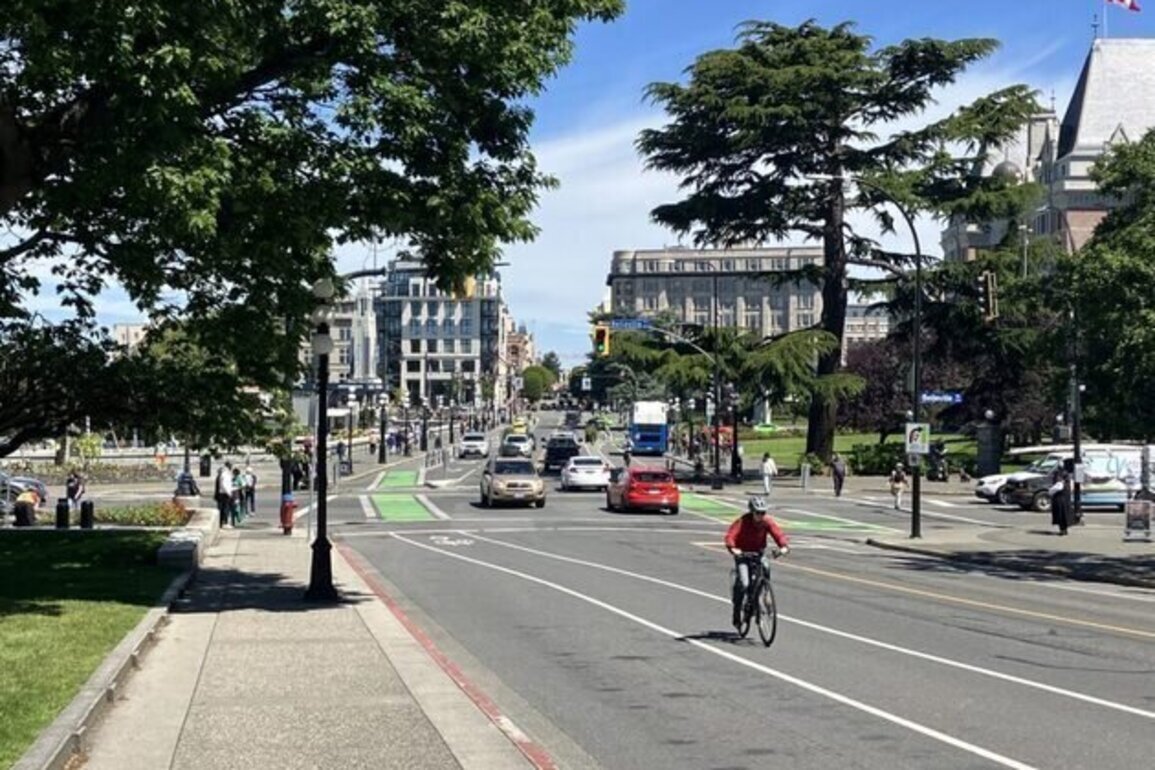
City staff and officials said they took heart that their key policies for building electrification, community resilience, and climate adaptation had gained momentum. They said related priorities like housing and affordability measures offer a path to advancing climate goals. Measures to address climate change can be linked to topics communities care about most: density, transit, and the high cost of living.
"Housing is absolutely the political priority right now," said one municipal employee in Ontario. "The good news is, a lot of what we're doing on climate fits within that-density, transit, and complete communities are all climate solutions."
An elected official in B.C. told Re.Climate that affordability and housing are issues that get traction among residents. "If you can frame climate work as improving comfort, lowering bills, and supporting compact growth, council listens."
Interviewees also said resilience and adaptation messaging resonated with city residents, providing a safe, tangible way to talk about climate change and its impacts.
"We're trying to lean into [adaptation] and use it as an entry point-measures like heat pumps can both protect people from cooling and decarbonize buildings," said a municipal employee in B.C.
Trusted messengers are key to credibility. "When someone from public health or the local community centre talks about climate, people actually listen. It feels real," said another B.C. municipal employee.
Misinformation, confusion, noisy local opposition, and internal fragmentation are common barriers to adopting climate policies, interviewees said. Misinformation is especially prevalent online-where algorithms encourage outrage and disinformation. Online, people misrepresent climate action like building decarbonization policies and rezoning for densification.
"By the time we correct something, the story's already spread," said one municipal worker in Ontario. "We end up chasing misinformation instead of leading the conversation."
Another noted, "the social media cycle kills nuance. You try to explain a code change, and it turns into 'the city's banning heat.'"
Small, but loud groups, sometimes backed by industry, drown out or intimidate less vocal groups of supporters, residents and businesses alike. Issues like densification and step codes are framed as threats to local neighbourhoods.
"It's always the 10 loudest people who show up angry, but the majority just want us to get on with it," said a B.C. elected official.
Misalignment between city and provincial policies is another common challenge, as shifting frameworks force cities to withdraw from their policy commitments, causing confusion and mistrust.
"Every time the province shifts direction, we have to rebuild trust-people think we're contradicting ourselves."
Internal fragmentation was also frequently cited, with bureaucracy getting in the way for larger cities and capacity gaps hindering smaller cities.
"Communications sits apart from policy, so the story about what we're doing doesn't always land," said an elected official in Ontario.
Equity gaps, affordability anxiety, and elections/short-termism were also identified as challenges. "If we don't frame this around cost savings and comfort, we lose people who are already stretched." said an elected official in BC.
While the policies and opposition look different in each municipality, there are some common attributes to building broad support among diverse constituents. Highlight the cost of inaction and emphasize the need for investments in infrastructure to build communities that will be genuinely resilient, affordable and a pleasure to live in over the longer haul.
"We have to show that climate work is infrastructure work-spend now or spend more later," said a municipal worker in Ontario.
To reclaim the middle ground, cities can highlight the co-benefits offered by climate policies, including affordability, lower cost of living, and improvements in public health and quality of life. These are policies that make communities livable for all.
"If it's about saving money or protecting your kids from smoke, people get onboard. If it's about carbon, they don't," a municipal employee in Ontario said.
Cities must push for policies that have stable funding available, align with provincial legislation, and mobilize existing alliances. Building relationships across sectors can create these alliances if they don't already exist. It's also helpful to share communications strategies, and create regional networks of collaborators to share insights, connecting policy, purpose, and public experience.
"If we could share one regional climate comms hub, we'd all sound more consistent and save time," said a municipal worker in B.C. An elected official there noted, "we'd all save so much time if there were shared templates and examples-something we could adapt instead of starting from scratch every time."
Re.Climate's full report was the main product of the first phase of EcoA's Clean Cities Research Project, a two-year program of research and guidance on strategies to mobilize receptive, though often passive, segments of voters in support of urban climate policies.
It helps us measure & strengthen the impact of our reporting.
Have more to say? Email [email protected]
Source: The Energy Mix