

Steve Rolston had a dream-a watercolour painting of a charming, walkable village nestled among nature trails, all surrounded by beautiful lakes. In the painting, you'll find lovely, cozy, and eco-friendly homes, many of which are powered by solar energy.
Here's the thing: The neighbourhood is real, it's in Westport, Ontario, and it's being built by Rolston's company, Land Ark Homes. It's called Watercolour.
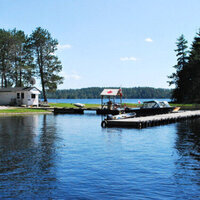
It wasn't long after arriving in Westport that I started to get it. The setting evokes an idyllic sense of community, where residents enjoy a blend of sustainable living and natural beauty. Life here feels peaceful and connected, with tranquil lake views, vibrant green spaces, and a friendly, village atmosphere.
This seemed like the perfect place to begin our series Chasing Net Zero, featuring some of the most inspiring home builders across Canada going net-zero.
Every single home in Watercolour is super energy efficient and at least net-zero ready, and many are solar-powered net-zero homes. Land Ark has already built 73 homes labelled in the Canadian Home Builders' Association Net Zero Home Labelling Program.
It's exactly what Rolston dreamed of building, but like any dream, a lot of blood, sweat, and tears went into making Watercolour a reality.
Rolston started Land Ark Homes 35 years ago, and after a decade-long hiatus when he served as a volunteer in various Christian ministries around the world, he was inspired to once again return to home building after a walk in Niagara On The Lake.
"When I would travel, I'd Google new homes and new home communities," said Rolston. "In Niagara on the Lake, I walked in a walkable land plan-and I knew nothing about great land planning-and that really changed my life."
It turns out Rolston already owned a nice parcel of land in Westport that he had purchased years before.
He felt so inspired he got back into home building and worked with Mark Snyder, a land planner, to create a walkable land plan in Westport. He wanted large front porches and "a funny thing called sidewalks," all in a village in which you could walk to stores, restaurants, churches, community facilities and all of the things people need.
"You give the best land, the creek and stream corridors not to individuals, but to the public," Rolston said. And then you preserve the best views and develop a ridge trail and hilltop park right in the neighbourhood.
When I first arrived at the Land Ark show home, Rolston said, "Hop in the truck, I want to show you something." He drove a short distance to a lookout on Foley Mountain overlooking Westport. And of course five minutes down the trail, he points off to the right, and there's a deer lying in the woods.
The park is "800 acres, and there are over 10 kilometres of hiking trails," he said, adding that this also connects to 160 kilometres of trails on the Rideau.
"This is one of the things that helped me fall in love with Westport 25 years ago," said Rolston.
He says he envisioned building homes that combined a cottage and a house experience in one. "When you begin with the end in mind: 'what will this look like two, three, 400 years from now?' You realize there's Watercolour life: living in a walkable European-[like] village at the base of a mountain surrounded by water," said Rolston.
"But there's also Watercolour homes, which are these high-performance homes where people can reduce their carbon footprint for their home 12-fold here in Ontario by virtue of building a net -zero ready home."
Rolston was always interested in energy efficiency, but a hard reality settled in when it came time to decide on what sort of homes to build in Westport.
"We found that we had no natural gas here in Westport," he said. "We could bury propane tanks, but that would sort of be like going back to the dark ages."
"But there was this newfangled thing that we were learning about called cold climate air source heat pumps."
The more he learned, the more Rolston became intrigued with the idea of super energy-efficient, net-zero homes. So, he met with Stephen Magneron of Homesol Building Solutions, and he enlisted Gord Cooke at Building Knowledge; both were well-known energy advisors and consultants. They offered up a lot of ideas.
When he felt he was "tied up in knots" with: 'Oh, here's a hundred production things you can do, here's a hundred performance things you can do," he had to figure out the best way to blend all of those ideas together. So he talked to someone who had done this before.
"We realized that Doug Tarry is certainly the leader in the industry," said Rolston, referring to Doug Tarry of Doug Tarry Homes in St. Thomas, Ontario. Tarry committed to building only minimum net-zero ready homes back in 2018.
"Doug Tarry graciously showed me a couple of his model homes, and I walked around, and I thought, 'Yeah, here's a builder trying to build 50 or a 100 or 150 of these homes.'"
Rolston's general manager of construction, Kevin Rankin, shared Steve's anxiety. "It was a very stressful time to be honest," he said. But after seeing Tarry's system, they realized it was not all that complicated. So, they took the system and adapted it for their own type of homes, and they were off to the races.
Land Ark's Watercolour homes were going to be minimum net-zero ready, some of the best homes he's ever built. Since then, Land Ark has built 73 homes that are labelled as Net-Zero or Net-Zero Ready.
Rankin gave me a tour of a show home in Westport to share their secret sauce for getting to net-zero.
Walls and windows: It all starts with 26 walls with insulation and a second layer of foam insulation on the outside of the walls that reaches an amazing R30 insulation. The walls are carefully air-sealed, and triple-paned windows are used throughout the home.
Energy efficient heat pumps: Down in the mechanical room is a Mitsubishi air source heat pump with electric backup. These heat pumps are now rated to operate in temperatures as low as -37 C and are up to 700% energy-efficient in cooling mode. They are very efficient, even at relatively low temperatures, which means the electric resistance backup heaters will rarely be used. And since there is no gas line, there is no gas bill either-a big benefit. Rankin then showed me the heat pump water heater, which he says can save homeowners up to $500 per year on energy costs when compared to a regular electric water heater.
Fresh air machine: Then Rankin moved over to the energy recovery ventilator, which provides this very airtight home with abundant fresh, double-filtered air and all while recovering up to 80% of the heat from the exhaust air.
It's not a standard feature in Land Ark Homes, but this show home also had a Tesla Powerwall battery. "It's a whole home energy backup system. So, this allows you to not even have the lights flicker when the power goes out," said Rankin.
Now that Land Ark has settled into building net-zero ready homes in Watercolour, Rolston is confident that this approach will change homebuilding forever. His company is one of 365 builders, renovators and energy advisors registered with the CHBA Net Zero Home Labelling program.
"In humble little Westport, the homes of the future are being built, and it's a template for a thousand communities across Canada and maybe even 10,000 communities across the United States as well," said Rolston.
Land Ark homeowner Dave Brown was searching for just the right new home. He was definitely attracted by the idea of net-zero, but Brown and his wife were also quite taken by the walkable community and the proximity of nature. He's taken up bird watching.
"It's not just about really well-built houses," Brown said. "It's not just about reducing our carbon footprint. It's not just about community. It's how those all work together."
Rolston reads voraciously about building better homes and designing livable neighbourhoods and his advice for consumers is to demand their builders build them a net zero-home. "Not an obsolete home, as Sam Rashkin would say. That's the way he describes it in his book, Housing 2.0 A Disruption Survival Guide. Rashkin was chief architect at the U.S. Department of Energy and he says, you're either building an obsolete home based on 10, 20, 30, 40, 50-year-old technology, or you're building a net-zero energy ready home.
This article was first posted at Green Energy Futures and is republished here with permission.
Source: The Energy Mix