

BEIJING, June 4 (Xinhua) -- Once a looming 110-meter-high mountain of waste -- rivaling a 30-story skyscraper -- towered over Shenzhen, south China's Guangdong Province. Today, that eyesore is gone, soon to be replaced by a cutting-edge digital industry park and a lush ecological green valley.
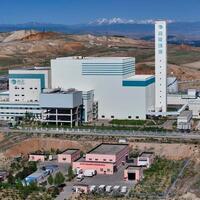
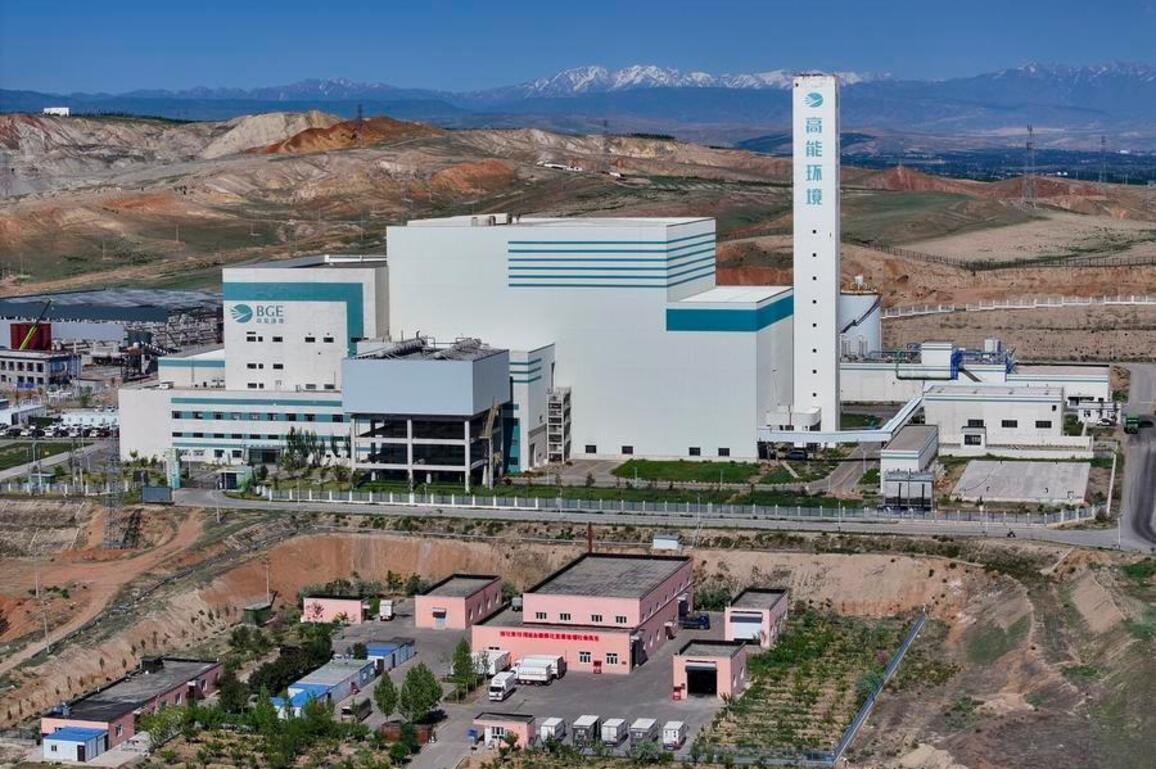
Hundreds of kilometers away in the province's capital city of Guangzhou, a chimney at a waste incineration plant has been turned into a 120-meter-high tower, where visitors can sip coffee while enjoying a panoramic view of the garden-like facility that processes 8,000 tonnes of household waste every day. Few could have ever imagined such a place nestled within a national 3A-level tourist attraction.
These are not isolated green stunts, but vivid signs of a fundamental shift in how China manages its mounting garbage -- from simply burying it to mining it for energy, materials, and even more.
DIGGING UP THE PAST
Chinese cities were once haunted by "garbage siege" as landfills overflowed with untreated waste.
By way of example, the four first-tier cities of Beijing, Shanghai, Guangzhou, and Shenzhen each generate more than 20,000 tonnes of household waste per day. If piled one meter high, a single megacity's daily garbage could cover 20 standard soccer fields, according to data released in 2025.
Yet despite this massive volume, landfilling of waste has become a thing of the past.
In Shenzhen, the leveled waste mountain was Yulong landfill, the city's first domestic waste dump. Operated from 1983 to 1997 and capped in 2005, it held 2.55 million cubic meters of waste.
The landfill used to be the city's edge, but now it's surrounded by high-rises due to the city's expansion, according to Cao Yongmin, a designer of the landfill's environmental restoration project.
The project, China's largest landfill excavation project, officially started in 2024. Each day, 6,000 tonnes of waste are dug up, with light combustibles such as plastics and rubber being sent to nearby incinerators for power generation.
"This is not just about settling environmental debts, but also about reclaiming space for development," said Rao Yiming, an official with Qingshuihe Subdistrict in Luohu District, where the landfill is located.
The restoration project is expected to be completed by the end of this year, freeing up about 300,000 square meters of land for a planned digital industry cluster and an ecological green valley, Rao said.
Similar transformations are taking place across the country. Beijing offers another striking example: the site of the Beijing Garden Expo Park was once one of the city's largest sources of windblown sand, littered with gravel pits and waste dumps.
As millions of tonnes of construction waste were recycled to shape the terrain, sandpits turned into scenic spots, and aquatic plants introduced to filter water, the site has been turned from a sandstorm source into an ecological park in about three years, said Hu Zhenxing, an official from the Beijing Fengtai cultural tourism group.
Today, none of the four megacities operate landfills that receive untreated garbage. Furthermore, such restoration efforts reflected a national trend -- China is rapidly clearing its historical waste backlog.
To date, more than 80 percent of Chinese cities have completed the remediation of aged waste mountains, with landfill capping and ecological restoration becoming mainstream.
TURNING WASTE INTO WATTS AND MORE
So where does all that waste go? Instead of being simply buried, most of China's household waste is now incinerated -- not the dirty and smoky kind of the past, but a high-tech process that generates electricity, heat and even construction materials.
There is an eco-industrial park in Foshan City, Guangdong, that treats 4,500 tonnes of household waste every day. It not only makes electricity, but also high-temperature steam, which is fed through a pipeline network to nearby factories, replacing fossil fuels in a cascading energy cycle.
At an incineration plant in Shanghai Laogang Waste Disposal Base, the entire process -- from automatic unloading and fermentation to incineration and emissions monitoring -- is largely unmanned. Pollutants in the flue gas are near zero, outperforming both national and EU standards.
Such scenes were unimaginable a decade ago, said Jin Yiying, an associate professor at the School of Environment, Tsinghua University.
In 2010, China had just 119 household waste incineration plants, handling only 20 percent of all waste, with landfilling being dominant. At the time, one of the main barriers to waste incineration was the public's fear of toxic smoke, according to Jin.
Nowadays, modern incinerators maintain furnace temperatures above 850 degrees Celsius, ensuring that dioxins are completely decomposed. Any trace amounts that re-form as flue gases cool are captured by activated carbon and bag filters, and heavy metals and acidic gases are trapped through other solutions.
"Only clean smoke is released into the sky," said Wu Yuefeng, deputy general manager of the managing company of the Laogang waste disposal base.
Even the ash is put to use. Bottom ash, accounting for about 20 percent of the waste, contains iron, copper, aluminum and even trace amounts of gold and silver.
At the Fushan Circular Economy Industrial Park in Guangzhou -- the facility with the coffee-serving observation tower -- the 600,000 tonnes of ash produced in 2025 were processed into eco-friendly brick materials for roads and buildings.
Zhong Zhuoyan, general manager of the park's operating company, added that they truly squeeze every last drop of value from the waste.
Official data has shown that by November 2025, incineration had accounted for 78.1 percent of China's urban household waste treatment capacity, up 19.2 percentage points from the end of 2020.
China now accounts for about 60 percent of global waste incineration capacity, far surpassing the combined total of Europe, the United States and Japan.
Moving from garbage siege to the disappearance of waste mountains, China has accomplished in 10 years what took developed countries 30 years, experts said, noting that during the 15th Five-Year Plan period (2026-2030), China's waste treatment sector is set to further shift from harmless disposal to resources recovery. These dynamic changes are painting a rosy picture of a Beautiful China.