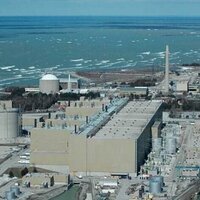


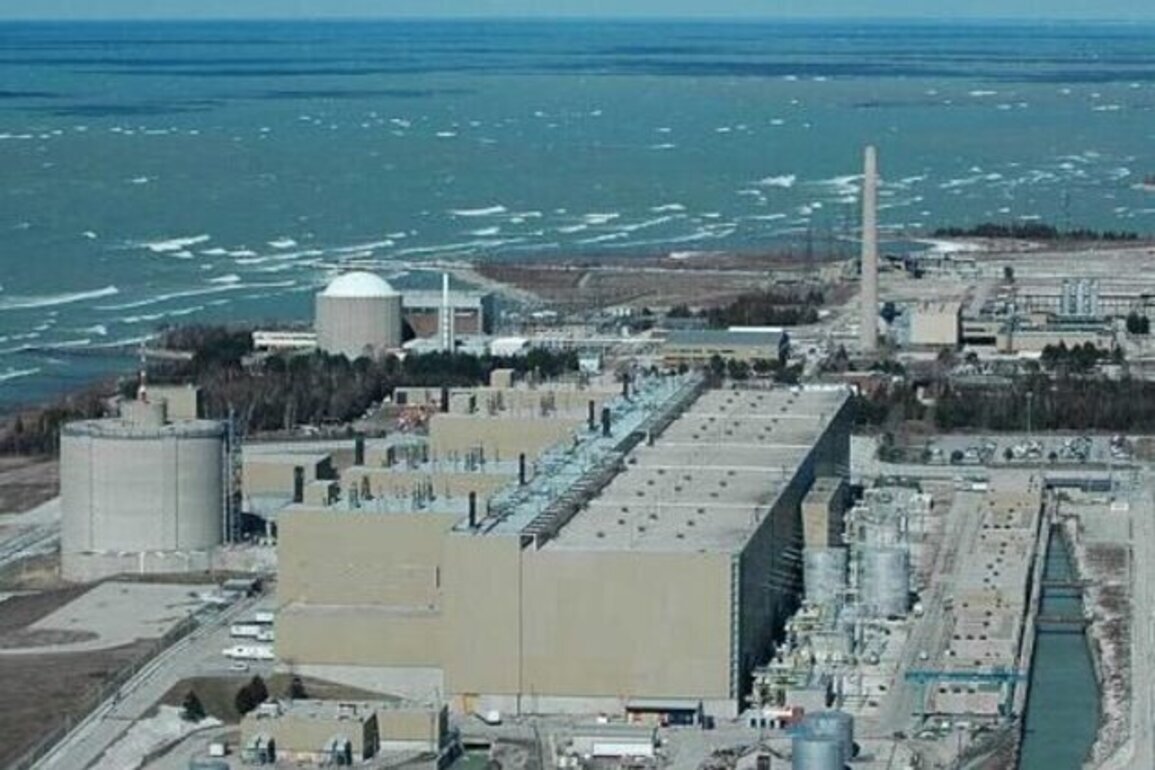
Federal impact assessment reviews for two Ontario nuclear projects risk serving as little more than procedural approvals, a Toronto environmental studies professor says, as they move through the process without first identifying the reactor types to be built.
Ontario's Wesleyville Project in Port Hope has several reactor technologies under consideration, and the Bruce C expansion near Kincardine has not yet selected a technology, either. Both are undergoing federal impact assessment.
Mark Winfield, a professor at the Faculty of Environmental and Urban Change at York University, told The Energy Mix he is also concerned that proposed federal approval reforms, combined with Bill C-5 passed last summer, and the newly announced National Electricity Strategy, could lead to what he called "the explicit politicization of decision-making on nuclear projects." Where "once projects are designated as being in the national interest," he said, "they will be approved regardless of what the technical reviews find."
That would be "a very dangerous situation when dealing with what will be first-of-kind reactors in Canada, or in some cases globally," he added.
Winfield said the changes effectively shift final authority from the Canadian Nuclear Safety Commission (CNSC) to cabinet if concerns arise during assessment. It also shifts accountability if those decisions eventually go wrong-although the elected officials involved would likely be out of office by the time the full impacts were known.
"The implication of going to cabinet is that the regulator's concerns could be overridden for political or economic reasons," he said, recalling Harper government's 2008 decision to fire the CNSC chair after the rejection of the MAPLE reactors at Chalk River.
Winfield said Canada's new electricity strategy seemed to "aggressively skate over" the cost implications of its nuclear heavy focus, as nuclear energy continues to be subject to enormous capital costs and construction delays.
"Essentially the federal strategy seems to be following Ontario's lead-a heavy emphasis on gas and nuclear, and mostly ignoring the global movement in the direction of renewables."
Critics have warned that Ontario's nuclear expansion strategy could carry major long-term financial consequences.
In May, the Ontario government announced a $300-million cost-sharing agreement with Bruce Power to advance early planning for the expansion of the Bruce C nuclear complex, a project the province said would support 18,900 jobs and help make Ontario home to the largest nuclear generating facility in the world.
The announcement marked one of the clearest signals yet that Premier Doug Ford's government sees large-scale nuclear expansion as the backbone of Ontario's future electricity system. It also landed amid criticism that the province is shifting billions in electricity costs onto taxpayers, obscuring the long-term price of nuclear refurbishments, new reactors, and small modular nuclear projects.
Ontario's 2026 budget led the province into a $13.8-billion deficit, with energy expenditures- and nuclear energy in particular-central to the shortfall. The government's budget documents flagged large "amounts for electricity cost relief" and related line items, but stopped short of detailing long-term capital costs. That omission drew sharp criticism from electricity system experts.
Winfield said the budget "goes on at some length about how wonderful [nuclear projects] are in terms of their economic contributions, but never actually talks about costs." Using figures the province provided for electricity supports, Winfield calculated that electricity-related spending accounted for roughly half the deficit-about $6.9 billion on the books-but said it would be difficult to figure out exactly how much of that line item in the budget is nuclear related because the figures are "deliberately opaque."
Environmental Defence Canada Programs Director Keith Brooks too linked the deficit to rising nuclear and legacy refurbishment costs, as well as growing use of gas power plants to meet growing demand while the nuclear plants are being brought online.
Last November, Ontario raised its basic electricity rate by 29% and simultaneously expanded rebate programs, which the government framed as short-term relief and a change in cost allocations. Both Winfield and Brooks said those measures masked the underlying driver: rising costs tied to refurbished and new nuclear plants. "What they seem to be doing is setting a precedent-allowing the costs for these projects to be charged to ratepayers before they're built," Winfield said, adding that the combination of the proposed new builds, the SMR pilots, and refurbishments will push capital expenditures "north of $400 billion".
Winfield that will leave the province choose among three unpalatable options ahead: large rate increases that could push electricity to "30 to 40 cents per kilowatt-hour," continued deficit-financed subsidies that ratchet up debt, or sales of public assets to cover costs. Brooks pointed to the alternatives the government is downplaying: demand-side conservation, faster deployment of wind, solar and batteries, and avoiding new gas-fired capacity when battery storage would be cheaper and cleaner. He notes batteries have come in at a fraction of the contracted cost of gas in recent procurements, and that contracting gas now risks both higher long-term costs and higher local emissions.
The Ministry of Energy and Mines was contacted for a comment but did not reply in time for publication. The Ministry of Finance declined to comment. Ontario's Economic Development, Job Creation and Trade Ministry was contacted for a comment but did not reply in time for publication.
Source: The Energy Mix