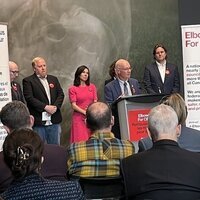


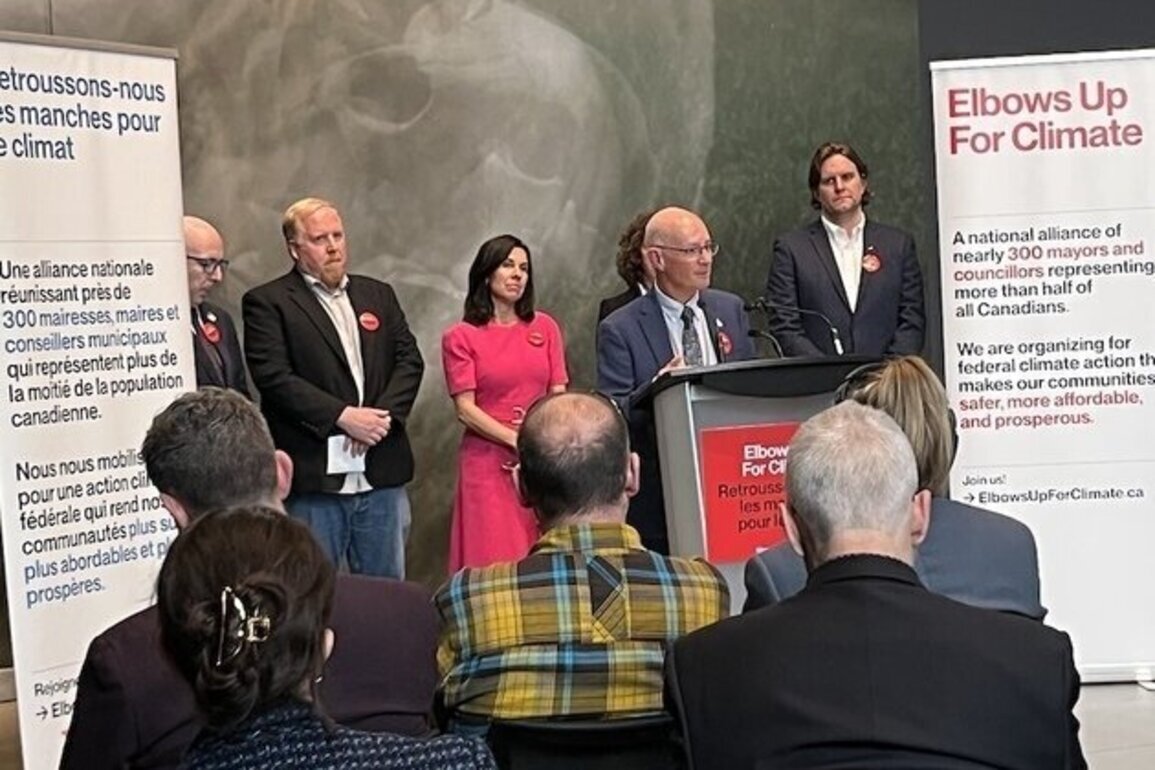
The cost of federal inaction for Canadians feeling the impacts of extreme weather took centre stage at a national summit on Thursday, as city leaders demanded climate-forward investment.
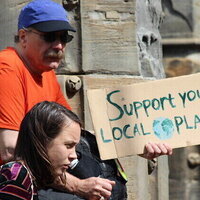
After a closed-door climate summit, members of the Elbows Up for Climate campaign-a collection of some 300 mayors, councillors, and local elected officials who represent about half of Canada's population-called on the federal government to deliver clean energy projects instead of fossil fuel production.
Campaign organizers report that a staggering one in five Canadians have already been affected this year by climate disasters. This means more than 7.5 million people in 53 communities have seen the impacts of drought, unsafe air quality, flood risk, and extreme heat so far in 2026. The group launched a Climate Impacts Map to live-track climate disasters this year.
Global warming already costs Canada nearly C$7,000 per household per year, at a moment when two-thirds of Canadians want clean energy developed more than fossil fuels and 85% want continued federal climate action, Elbows Up said.
Edmonton hosted this year's summit in a nod to Alberta as the epicentre of Canada's climate emergency, following events such as the 2016 Fort McMurray and 2024 Jasper wildfires.
"More Canadian communities are likely to burn to the ground this summer as senior orders of government appear ready to double down on fossil fuel expansion," Jasper Mayor Richard Ireland said in a statement. "Even as other national governments are committing to getting their citizens off the carbon-fuelled rollercoaster by investing in renewables and resilience, in Canada we continue pouring gasoline on our wildfires."
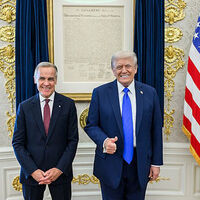
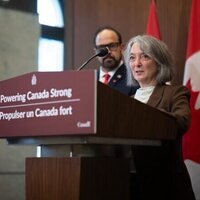
Ireland said the message for Prime Minister Mark Carney, heading into the Federation of Canadian Municipalities annual conference this weekend, is that "to build Canada strong and protect our communities, we need nation-building, not nation-burning, projects."
Mayors reiterated their five calls that the federal government must act on: build a national clean electricity grid; construct two million energy-efficient non-market homes; retrofit buildings to slash pollution and bills; implement a national high-speed railway and intercity electric bus network; and deliver a national resilience, response, and recovery strategy.
Yellowknife Mayor Ben Hendriksen advocated for a national clean grid, powered by affordable renewables like hydro and solar energy, to protect residents from pollution and international oil price shocks.
"It is us as municipalities and regions who pay to respond to climate emergencies," Hendriksen said. "And it is all of us who pay ever-increasing costs as oil and gas prices continue to climb."
In Edmonton, a city warming faster [pdf] than the global average and facing smokier summers from wildfires, Mayor Andrew Knack said residents are paying those costs, while roads are submerged by intense rainfall.
"[Given] how much rain we got the last couple of days, we were in pretty good shape, but that was because of the massive expense that we approved a number of years ago... to be more climate resilient," Knack told The Energy Mix. "Had this been taken more seriously decades ago, I wouldn't have had to vote in favour of a $1.6-billion flood mitigation program."
"That money then could've gone to building more libraries or recreation centres or parks."
Communities need federal support to adapt to extreme weather, Knack said, but Canada has shifted to "saying yes" about climate without taking real action.
"There is a far more significant cost for inaction, both financially and environmentally," he said.
And yet, even as a deadline looms for finalizing a Canada-Alberta pipeline agreement and Alberta pursues a referendum on a separation referendum, Knack described feeling a "more cautious optimism" and "spirit of collaboration" as the feds roll out longer-term nation-building projects to unite Canadians in self-reliance.
"I hope, through this work and through this summit, that it gives an opportunity for the prime minister and this current government to say, 'Because we're so focused on affordability, because we're so focused on the safety of our communities, we need to take action on this,'" Knack said.
Source: The Energy Mix